 Produkt Information und Operationsanleitung
Following the continuous evolution of surgical techniques and surgeons‘ preferences in knee replacement, Permedica has developed an innovative, completely redesigned instrument set.

SMART instruments set is conceived with a view to optimizing two main aspects: the technical one, relating to the surgical procedure, and the logistical one, relating to its management and movement.
Why ‚SMART‘?


Advantages for all the stakeholders
‘The instruments that adapt to the surgeon’s preferences, not vice versa’



Technical aspect
Femoral alignment with Extramedullary reference:
- Non violation of the diaphyseal canal
- Reduction of bleeding
- Reduction of embolic risk
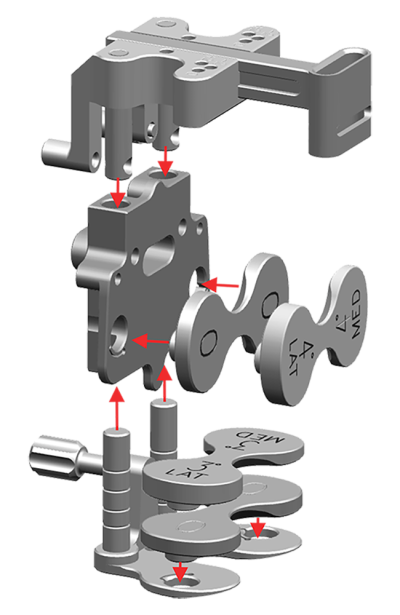
A Single Femoral Guide for multiple functions:
- valgus alignment
- femoral sizing
- rotational orientation
Two alignment options:
MECHANICAL alignment (MA):
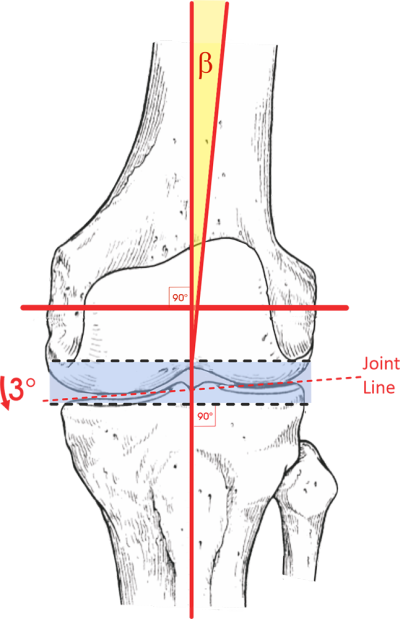
it is the classic alignment method, most commonly used, which aims to obtain a joint line perpendicular to the Mechanical Axis and consequently an equal distribution of the load of the lower limb on the medial and lateral compartment.
In extension, the Joint Line, i.e. the plane that contains the support points of the femoral condyles on the tibial plateaus, is inclined on average by 3° in varus.
The tibial resection is carried out perpendicular to the Mechanical Axis of the lower limb, which coincides with the Anatomical Tibial Axis. The tibial resection plane has 3° of valgus with respect to the joint line.
The distal femoral resection must also be carried out perpendicular to the Mechanical Axis, which normally has approximately 5°-7° of valgus with respect to the femoral Anatomical Axis; The resection plane has approximately 3° of varus compared to the joint line.
These 3° angular deviations between the femoral and tibial resections compensate each other and therefore the resection surfaces are parallel to each other and to the Epicondylar Axis.
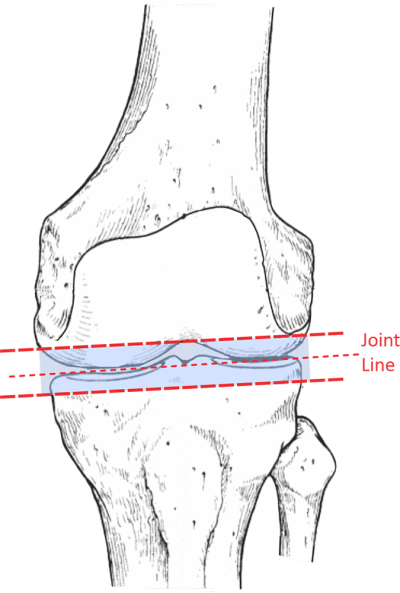
KINEMATIC alignment (KA):
this alignment method aims to obtain a Joint Line that keeps the morphological and functional characteristics of the individual patient unchanged.
The distal femoral resection is performed with the simple aim of removing the same amount of bone that will be replaced by the prosthesis, without any axial correction.
Consequently, the tibial resection is carried out parallel to the femoral one in order to obtain a symmetrical space.
Logistical aspect
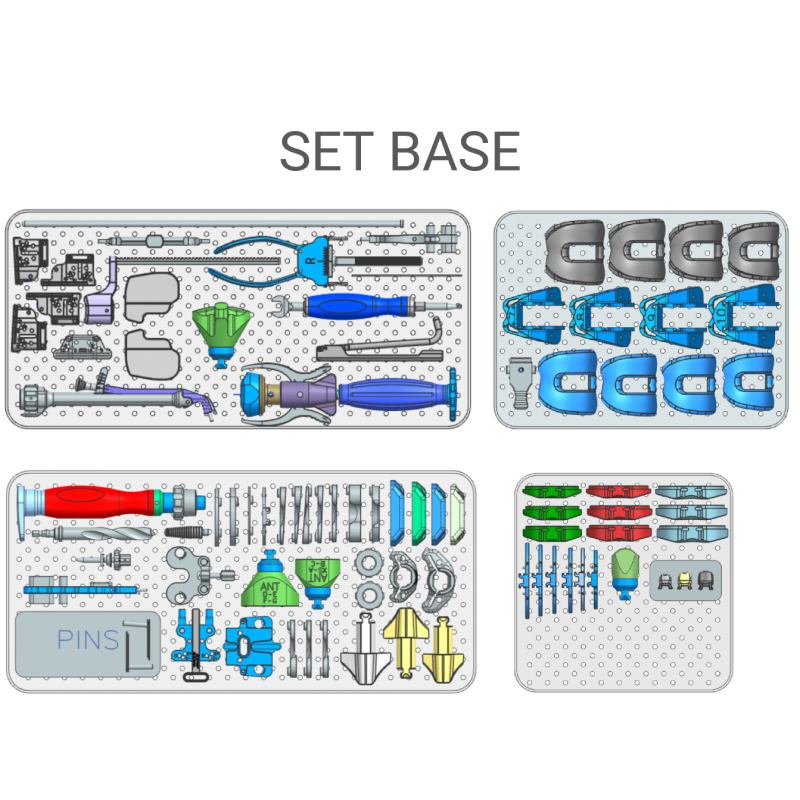
Compact Instruments Set, optimized in number of components and configuration:
Basic Set with the most commonly used sizes:
- Femurs from 7 to 10
- Tibia from B to G
- Inserts B-C, D-E, F-G – thickness 10, 12 e 14 mm
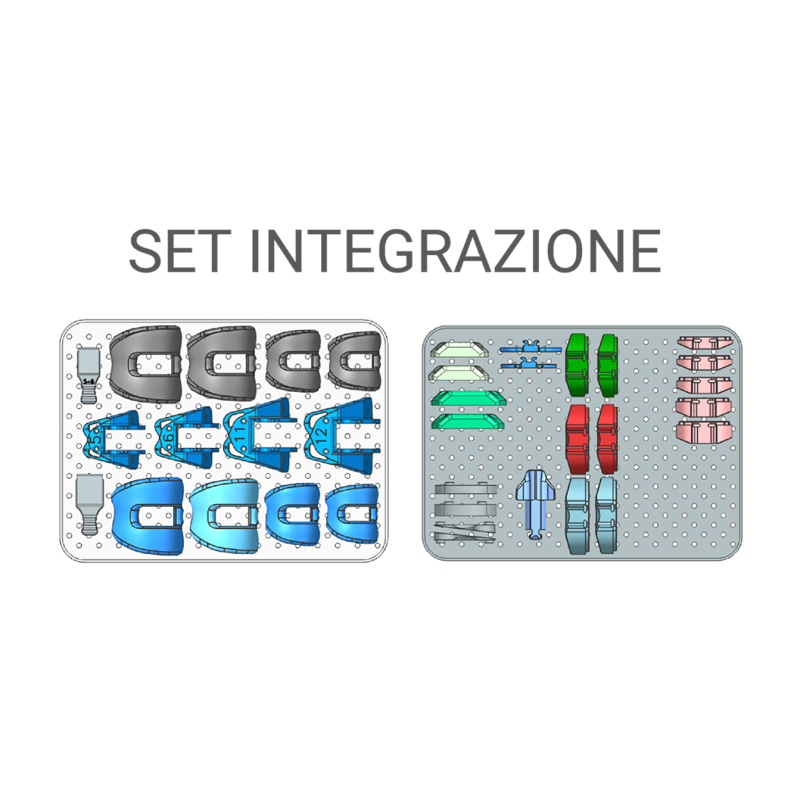
Integration Set with extreme sizes:
- Femurs size 5-6 and 11-12
- Tibia XS and A with related inserts
- Inserts B-C, D-E, F-G – thickness 17 and 20 mm
